An eyebrow shape for face shape can make a useful guide, but your natural growth pattern should get the first vote. Brows sit close to the eyes and affect expression more than a dramatic contour ever will. The most reliable approach is to preserve the structure you already have, make small adjustments to start, arch, and tail, and avoid turning a temporary trend into a permanent thinning session.
Start from your natural brow pattern before changing the outline
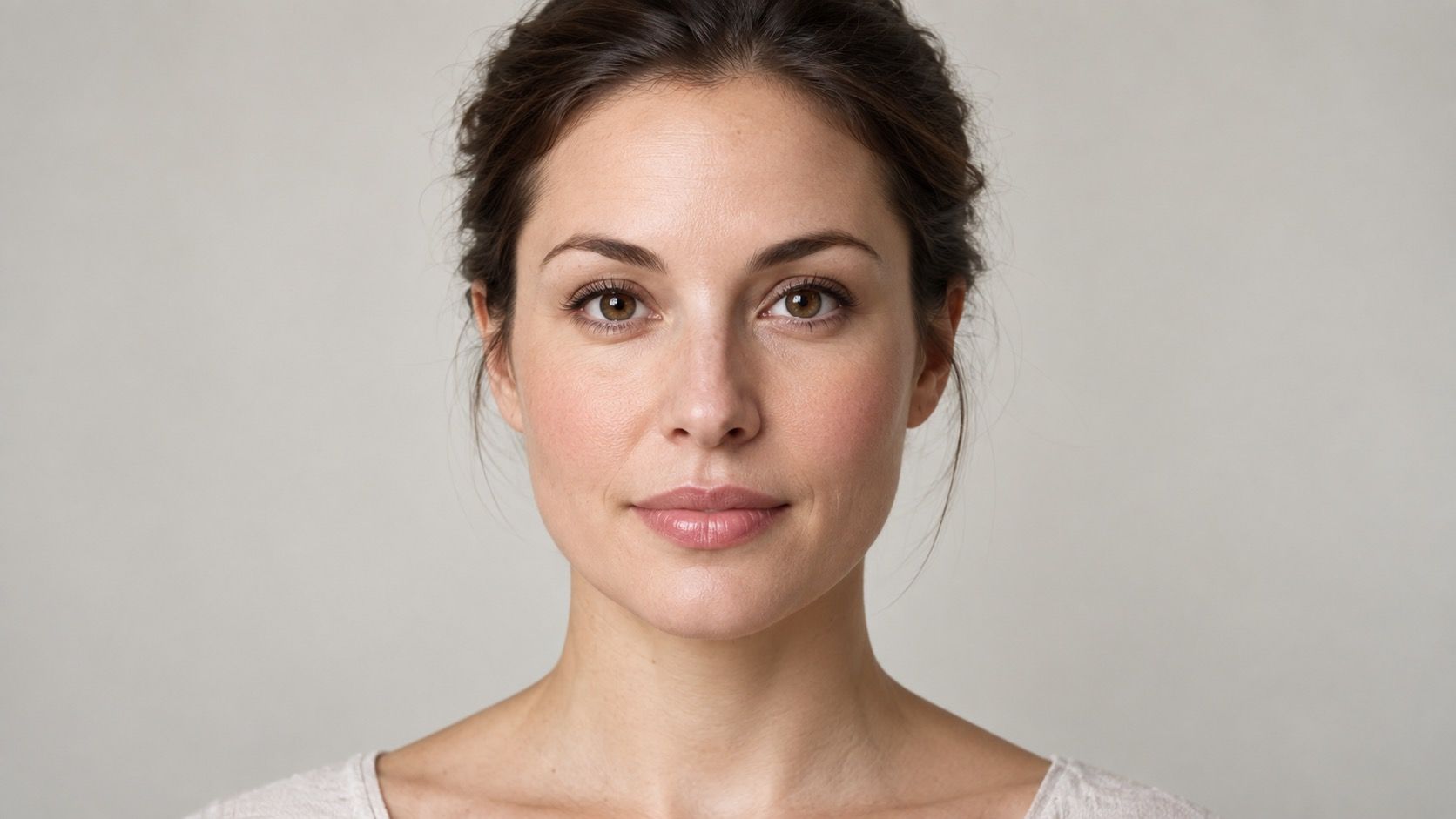
Brush brow hairs upward and outward in daylight, then look at the density, direction, and natural high point. One brow may sit higher, grow more sparsely at the tail, or have a stronger arch. That is ordinary anatomy, not a flaw to erase. Trying to force both brows into identical stencils often creates a harsher result than allowing a small difference to remain.
Map the brow start, arch, and tail with a light hand
Before plucking anything, fill the sparse areas lightly with a pencil or powder and photograph the result. Makeup lets you test a straighter brow, a softer arch, or a longer tail without losing growth. This matters because brows can be slow to return, especially after repeated waxing or tweezing. A brow shape guide should help you make reversible choices first.
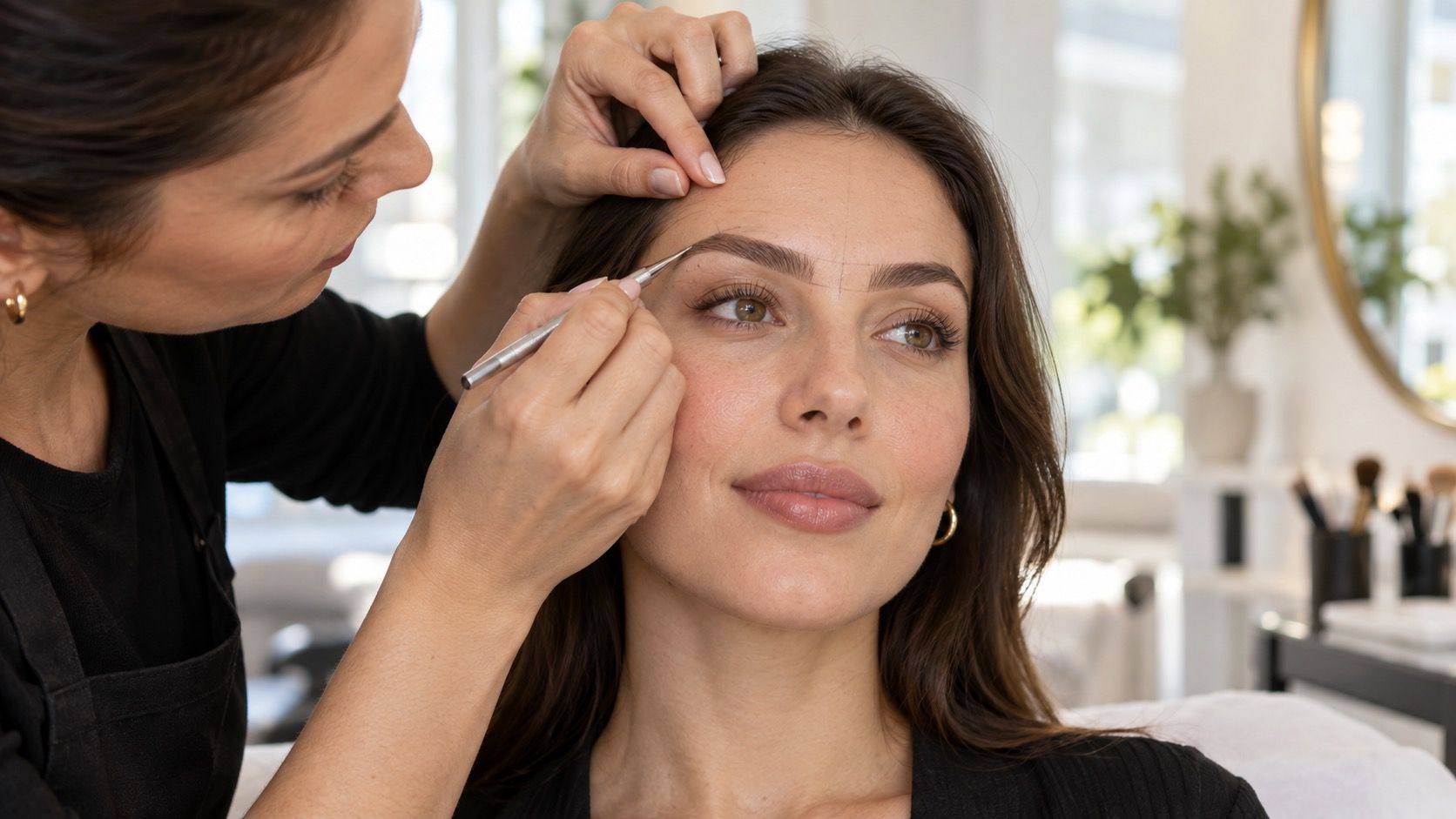
A simple map gives you reference points without becoming a rigid formula. The brow start often aligns roughly with the side of the nostril and inner eye area; the arch tends to sit above the outer portion of the iris when looking straight ahead; the tail points toward the outer eye. Use these as estimates, then adjust for your bone structure and where the hairs naturally grow.
The start should usually look softer than the tail. Square, dark blocks at the inner brow can make the eyes look close-set even when they are not. Create small hairlike marks and brush them through with a spoolie. At the tail, resist the urge to drag it sharply downward. A tail that falls too low can make the whole expression look tired, while an exaggeratedly lifted tail can look startled.
| Face tendency | Brow idea to try | What to avoid overdoing |
|---|---|---|
| Round | A gentle, defined arch for a little vertical structure | A high pointed peak that looks surprised |
| Long or oblong | A flatter, softly extended brow | Very tall arches that add more vertical emphasis |
| Square | A curved or softly angled arch | An ultra-sharp, heavily outlined brow |
| Heart, diamond, or triangle | Medium thickness and a relaxed arch | Over-thinning the tail or making the start too dark |
Brow ideas by face shape without treating them as rules
Round faces often suit a modest arch because it introduces a little upward direction. The key word is modest: a high, narrow peak can look disconnected from the rest of the face. Long or oblong faces may prefer a flatter line with a tail that travels outward rather than upward. That horizontal emphasis can feel balanced, but a completely straight brow can also look severe if it ignores your natural curve.
Square faces commonly look harmonious with a soft curve or rounded angle that does not repeat every strong line in the jaw. For heart and diamond faces, keeping enough fullness through the brow can balance a more prominent forehead or cheekbones. Triangle face proportions often benefit from brows that have presence near the upper face, but piling on dark product is not the same as creating balance. Thickness, colour, and spacing all change the effect.
Choose thickness and colour for the distance people see you from
Brow thickness should relate to the density of your hair and the scale of your features, not just the current fashion cycle. Removing the lower edge to make a brow thinner can change the eye area quickly, while growing it back can take months. If you want a lighter look, try brushing hairs up with clear gel or using a softer shade before reaching for tweezers.
Colour should usually be a little less intense than the brow hair itself, especially at the inner edge. Very dark, cool pencil can make warm brown hair look grey; a very warm product can look orange in daylight. Test the colour outside and from a few steps away. The best eyebrows for face shape should support the eyes, not arrive before you do.
Avoid overcorrecting symmetry in the mirror
Brows are sisters, not clones. One side of the face may lift more when you speak, and one eye can sit slightly higher. If you chase matching arches by removing hair from the stronger brow, you can end up with two thinner brows and still see the difference. Fill the lower brow to meet the fuller one where possible, then judge both with your whole face relaxed.
Step back often. A magnifying mirror is useful for a stray hair but terrible for deciding a shape because it makes every millimetre feel urgent. Use a normal mirror at arm’s length, then take a quick daylight photo. If the brows look even in overall weight and do not distract from your expression, they are doing their job.
Know when a brow professional is worth the appointment
A good brow professional can establish a conservative baseline, especially if you have uneven growth, have overplucked in the past, or are nervous about mapping an arch. Bring a photo of yourself on an ordinary day rather than only an edited inspiration image. Explain whether you want to keep your brow full, prefer low-maintenance grooming, or wear glasses that cover part of the brow line.
Ask for a shape that leaves room to adjust later. Threading, waxing, tinting, lamination, and permanent techniques all have different levels of commitment, and a treatment that looks dramatic immediately may settle differently after a few days. Keep the natural pattern as the foundation. The right brow shape for face shape makes your face feel clear and balanced, without looking like a separate graphic drawn above the eyes.
Plan changes slowly if you are unsure. A little pencil, a trim of only obvious strays, and one week of observing your usual expression can prevent regret. Good brow grooming leaves enough softness for your face to remain animated.