Finding hairstyles for face shape is less about locating one approved cut and more about understanding where a haircut puts its visual weight. Your face shape gives a useful starting map, but hair texture, density, natural part, and willingness to style it decide whether the map is practical. A good cut should still make sense when you have five minutes, not only when a stylist has a round brush in hand.
Start with your face shape, then look at the hair you actually have
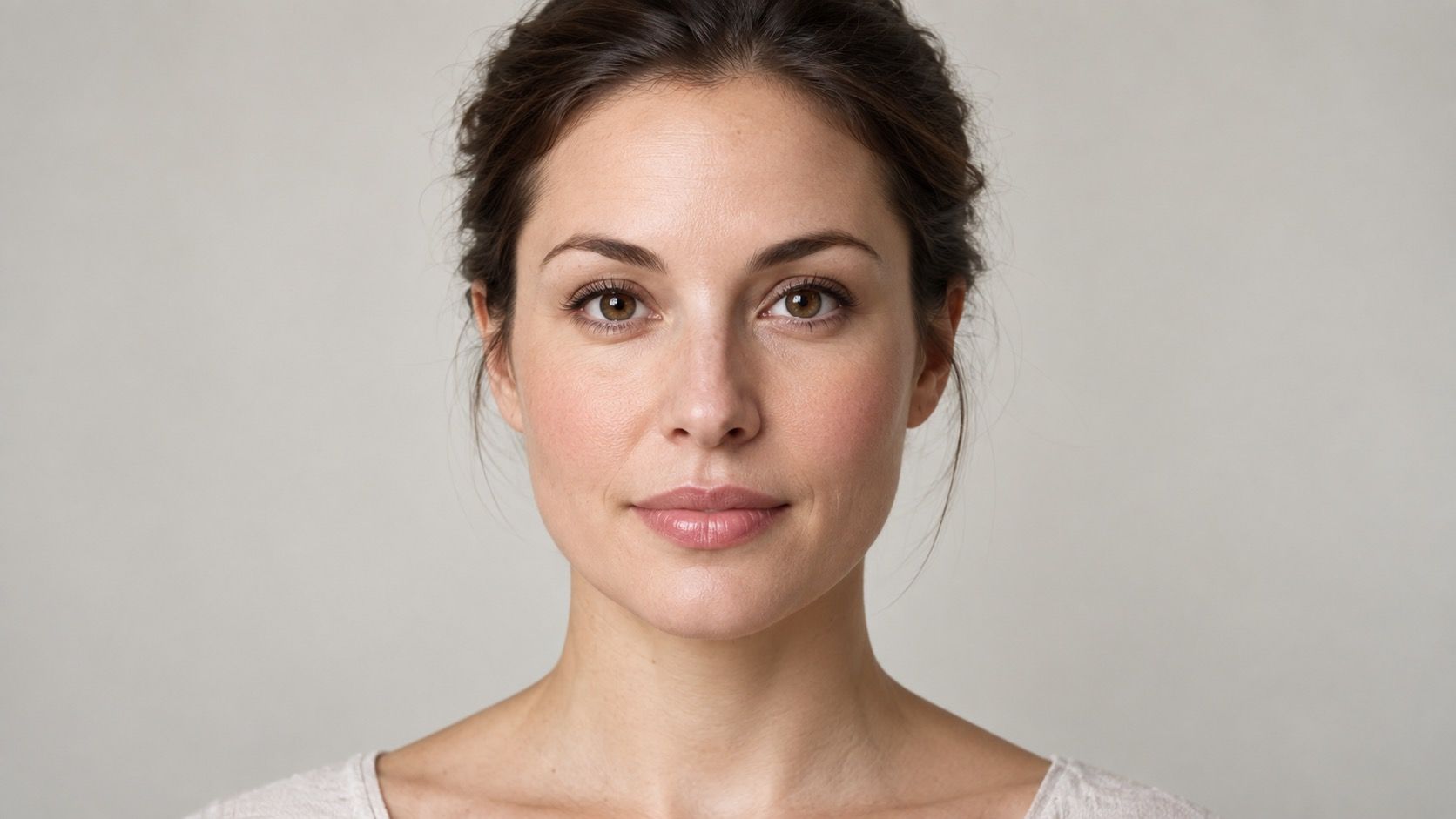
First, take a straight-on photo with your hair pulled away from the face. Compare forehead, cheekbone, and jaw widths, then notice whether the face is longer than it is wide. Oval, round, square, heart, diamond, oblong, and triangle are useful shorthand, but mixed proportions are normal. Do not spend an hour trying to prove you belong to one box before choosing a haircut.
Choose length by watching where the outline ends
Next, examine the less glamorous facts: does your hair flatten at the crown, expand in humidity, form a stubborn cowlick, or shrink several inches when curly? A cut that supposedly balances a round face may fail if it relies on volume your fine hair cannot hold. Conversely, a blunt shape recommended for straighter hair may become a wide triangle on dense curls. The best hairstyle for my face shape must also be the best hairstyle for my texture.
Length changes the outline around the face more than most people expect. A cut ending at the fullest part of the cheek or jaw creates a clear horizontal emphasis there. That can be useful when you want to add width to a narrow lower face, and less useful if you already feel the jaw dominates. Move a scarf or your hair up and down in the mirror to see how different end points alter the balance before committing to a big chop.
For longer faces, shoulder-length cuts with width around the cheeks can feel more balanced than very long, straight lengths. For rounder faces, length below the chin plus soft vertical pieces may create a little more length without making the hair severe. Square and triangle faces often benefit from movement near the corners of the jaw rather than one unbroken, blunt edge. These are tendencies, not bans; confidence and texture can easily outweigh a chart.
| Face proportion | Often helpful starting point | Question for the stylist |
|---|---|---|
| Round or softly wide | Length below the chin and movement through the front | Where will the widest part sit after it dries? |
| Long or oblong | Cheek-level texture, fringe, or shoulder-width shape | Will this add width without daily hot tools? |
| Square or triangle | Softness around the jaw and a flexible part | Can the perimeter avoid a hard jawline shelf? |
| Heart or diamond | Balanced volume through the lower half | How will the fringe behave at my hairline? |
Use layers and volume with a reason
Layers are not automatically flattering. On fine hair, too many short layers can erase density and leave the ends looking stringy. On thick hair, internal layers may remove bulk but can also create a fuzzy halo if the texture is wavy. Ask what each layer is supposed to do: add lift at the crown, soften cheekbones, remove weight near the jaw, or help curls stack. A clear answer is more useful than the word “movement” repeated three times.
Volume has a location. Lift at the crown reads differently from width at the temples or fullness below the chin. If your face is long, adding all volume high on the head can lengthen the overall silhouette further; a little side width may be more persuasive. If the forehead is narrow compared with the jaw, temple-level texture or an airy fringe can distribute attention upward. Test with dry shampoo or clips before cutting permanent layers.
Pick bangs and a part that cooperate with your growth pattern
Bangs can change a face quickly, but they come with maintenance. A curtain fringe works well for many face shapes because it can be opened, pushed aside, or blended back on days when it misbehaves. A full blunt fringe creates a stronger horizontal line and may visually shorten a long face, yet it needs frequent trims and can feel heavy on a low-density hairline.
Your natural part deserves more respect than it gets. A centre part creates symmetry and can make a precise haircut look modern; a side part can add asymmetry and lift. Neither is inherently better for a face shape. Photograph both from normal conversation distance, not only in a close selfie. If one side continually splits or collapses, work with that pattern rather than building a daily battle into the haircut.
Bring references that show the useful information
Bring two or three reference photos with similar texture, density, and styling effort to your own hair. A celebrity image is still useful if you say what you like about it: the length at the collarbone, the fringe opening, the softness at the jaw. A stylist can translate that request much better than “I want this exact cut,” especially when the photo was taken under studio lighting with extensions.
At the consultation, explain your maintenance limit honestly. Say whether you air-dry, wear glasses, put your hair up for work, or need to manage an active child and a humid commute. A haircut for face shape should support your ordinary life. Ask to see the shape from the side and back before leaving, and learn one simple styling method you can repeat at home.
Judge the haircut after a normal week
Freshly cut hair has product, attention, and novelty on its side. Give a new style several washes before deciding it is wrong. Notice where it expands, which pieces fall forward, and whether the length remains comfortable when tucked behind your ears. Small adjustments to the part, face frame, or fringe are often enough; a dramatic corrective cut is rarely the first sensible response.
The most flattering hairstyles for face shape are the ones that make your features feel intentional while leaving you recognisable. Use proportion as a tool, not a list of restrictions. A good haircut adds options: it looks polished when styled, acceptable when air-dried, and still feels like your own hair.