A heart shaped face often has an instantly recognisable outline: the upper face feels open and broad, cheekbones have presence, and the line tapers toward a narrower chin. That taper can be very elegant, yet styling advice gets confusing because many tips try to erase it. A better approach is to decide where you want visual weight: near the forehead, through the cheeks, or lower around the jaw.
How to tell whether you have a heart face shape
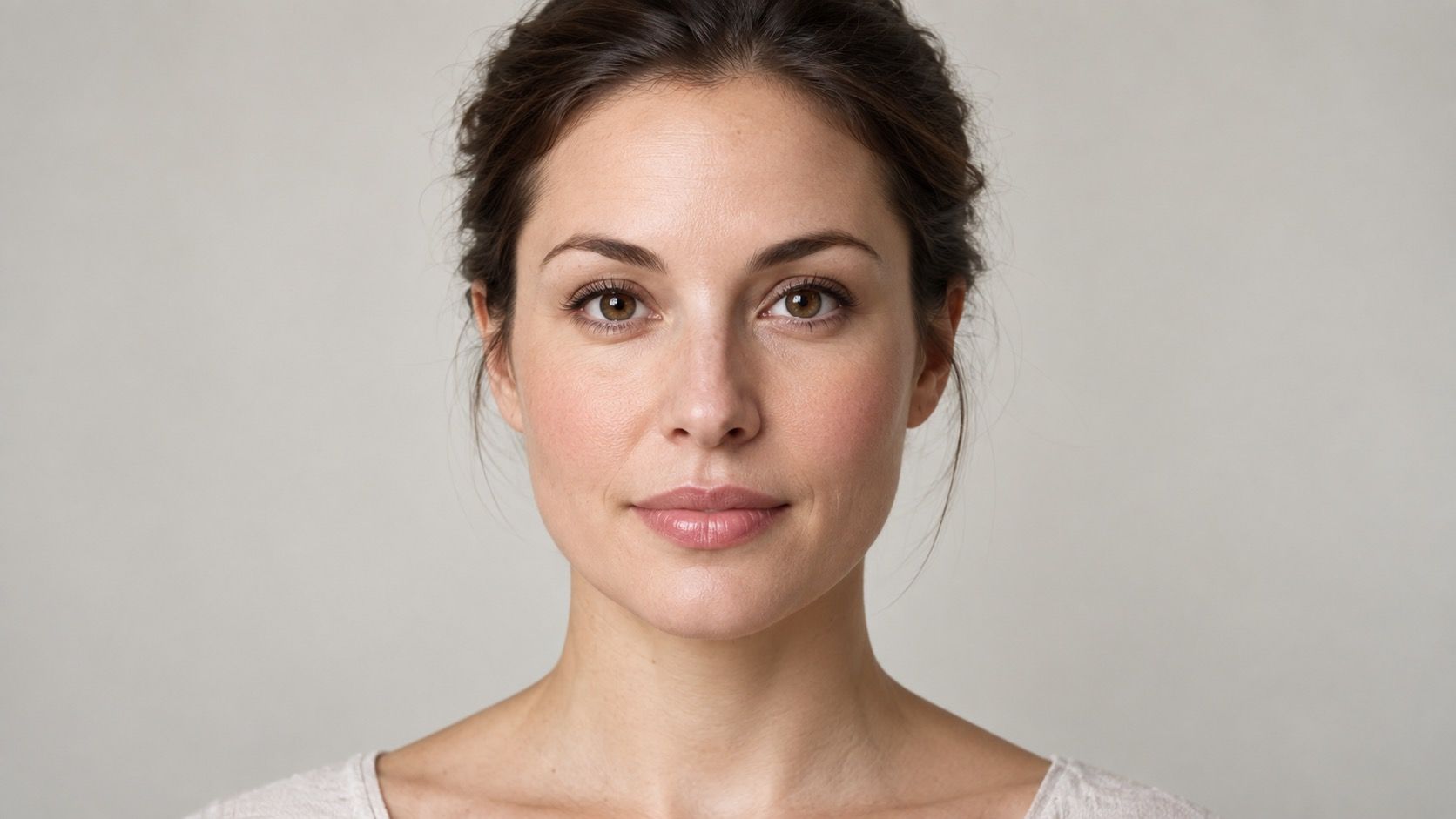
Pull your hair back and look at the width of your forehead, cheekbones, jaw, and chin. On a heart face, the forehead is usually the broadest area or close to it, with cheekbones also fairly wide. From there, the outline narrows to a small, sometimes pointed chin. A widow's peak is common but not required; plenty of heart faces have a rounded hairline. The important pattern is the gradual taper in the lower half.
Haircuts that put balance in the lower half
Do not rely on a traced outline alone. A selfie taken too close can enlarge the center of the face and make the chin appear smaller. Stand a little back, keep the camera at eye level, and compare a mirror view with a relaxed front-facing photo. If the jaw is as broad as the forehead, you may be closer to a square shape. If the cheekbones are the distinct widest point while both forehead and chin are narrow, diamond may be the better description.
Heart face features can vary widely. Some faces have a strong chin point and a gentle jaw; others have a soft, rounded chin but still show the same upper-to-lower narrowing. Treat the label as a way to evaluate proportions, not as a diagnosis. Your hairline, hair texture, and the way you wear glasses may alter the visual balance more than a few millimetres of measurement do.
A chin-length bob is popular for a reason: its weight lands near the narrowest part of a heart shaped face. A slightly textured bob, with the ends curving inward or outward naturally, can make the lower face feel more grounded without looking heavy. If your hair is thick, avoid a solid triangular shape that expands at the cheeks; internal layering or a slightly longer front keeps the line mobile.
For medium and long hair, ask for layers that begin around the cheekbones and continue toward the collarbone. The goal is not to add maximum side volume at the temples, where a heart face already has width. Instead, create fullness from the lower cheek to the jaw and shoulders. Loose waves, a soft bend below the ear, or curls that widen gradually through the ends are often more balanced than tight volume at the crown alone.
Short hair can be striking on a heart face. A pixie with texture around the crown and a longer, movable fringe keeps the top from becoming too bare while allowing the chin to remain visible. Very close sides combined with a high, rigid quiff can exaggerate the forehead, so check the profile as well as the front. The best haircut for a heart shaped face should feel workable from all angles, not only in a styled reference photo.
| What you want to change | Try | Be careful with |
|---|---|---|
| More lower-face balance | Chin-length bob, waves below the ear, fuller ends | All volume concentrated at the temples |
| Less emphasis on the forehead | Side fringe or soft curtain fringe | A tiny blunt fringe ending high above the brows |
| A clean short cut | Textured pixie with flexible fringe | Very tall, sharply sculpted top volume |
Bangs and partings make a visible difference
A curved fringe can visually shorten a broad upper face without creating a hard horizontal bar. Curtain bangs that are a little longer at the sides work well because they open around the eyes and blend into the cheek area. A side-swept fringe is another dependable option, especially when a deep part creates a diagonal that softens a prominent hairline or widow's peak.
Full blunt bangs are possible, but their density and width need attention. A heavy fringe that extends far past the outer brow can make the forehead feel even wider; a lightly textured edge with some separation is easier to integrate. If you have cowlicks at the hairline, ask your stylist to cut the fringe dry or nearly dry. That small practical step prevents the familiar surprise of a bang that springs up after the first wash.
A center part can suit longer hair when the lengths carry movement around the jaw. With very flat hair, it may create a wide upper frame and leave the chin isolated. Shifting the part just a centimetre off center often preserves the calm symmetry people like while adding enough asymmetry to make the whole outline feel less top-heavy.
Glasses and sunglasses: look for lower visual weight
Frames with a little width or detail toward the lower half can counterbalance a narrow chin. Rounded rectangles, softly curved cat-eyes, and frames with a subtle lower rim are useful starting points. The ideal pair should align roughly with the brows without covering them completely, then sit high enough that the cheekbones still have room beneath the lenses.
Very top-heavy frames can make a wide forehead appear broader, particularly when the upper rim is dark and the lower rim disappears. That does not make them wrong; it simply means they become the main statement. If you love a browline frame, try one with a gentler curve or a lighter colour, and compare it with a fuller acetate style in a photo rather than relying on the shop mirror.
Sunglasses add their own scale problem. Oversized lenses can look great, but a frame that is dramatically wider than the temples may overwhelm a small chin. Slightly rounded aviator shapes and medium-size upswept frames often retain personality without pulling all attention upward. Comfort matters too: a frame that slides down changes the apparent proportions and becomes annoying long before it becomes flattering.
Makeup, earrings, and facial hair can support the outline
Blush placed at the outer cheek and blended softly toward the temple can lift the face, while a small amount of colour carried slightly downward toward the mid-cheek adds fullness where a heart face tapers. Avoid drawing a long, sharp contour from temple to chin if the result hollows the lower face. Light shadow under the cheekbone is usually enough; the transition should disappear when viewed in daylight.
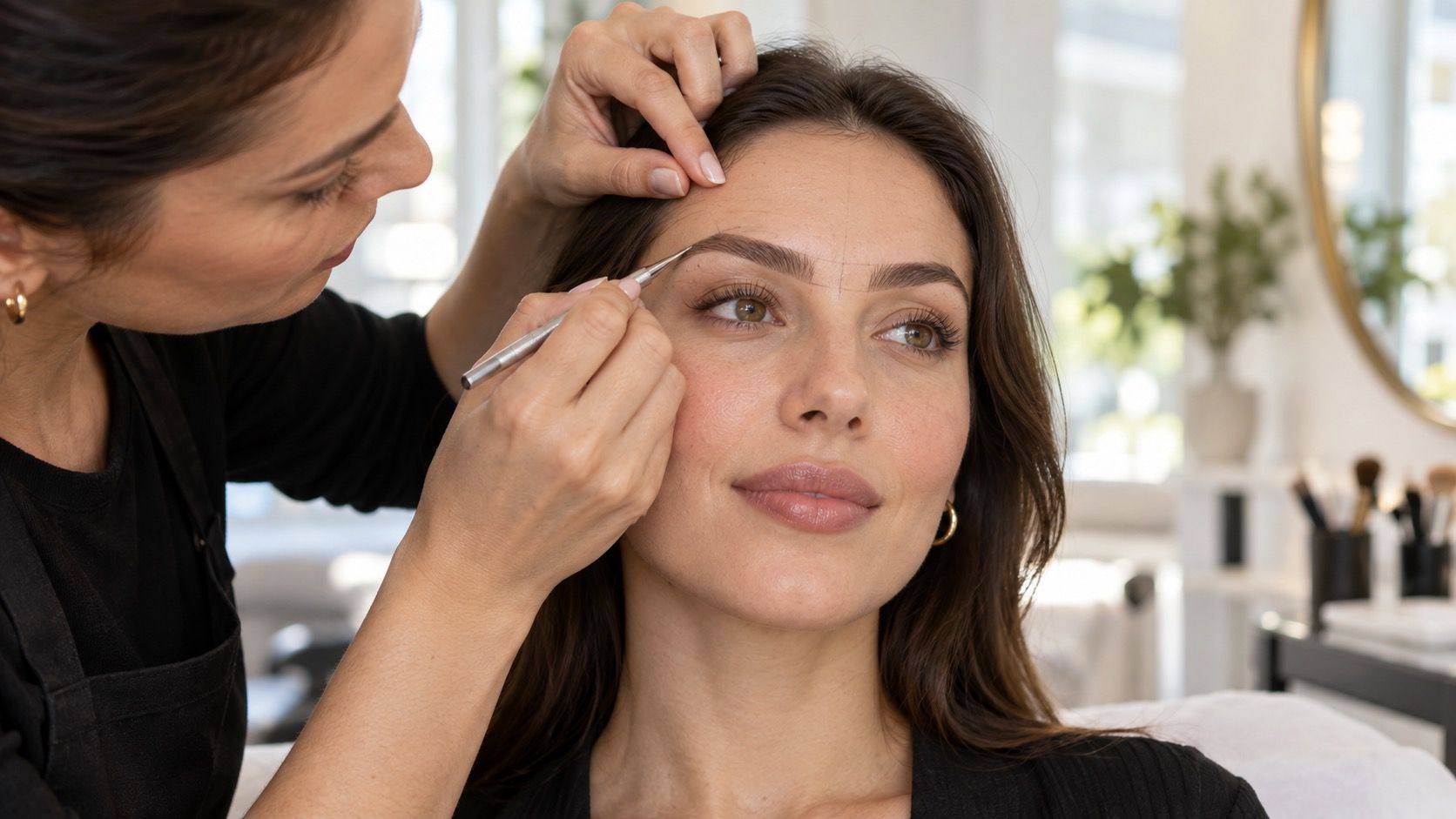
For brows, a gentle arch or a straighter shape with a soft tail can balance a wide forehead. Overly thin brows may make the upper face feel more exposed, so retain enough density to frame the eyes. Earrings such as small hoops, rounded drops, and shapes that become a little wider toward the bottom can echo the balance created by a chin-length haircut.
For people who wear facial hair, a little fullness at the chin can change the perceived taper quickly. A short beard with rounded lower corners often feels more natural than a beard cut into a sharp point. Keep the cheek line realistic to your growth pattern; an artificially high or overly sculpted line can draw attention back to the widest area of the face.
Make the final choice with your real routine in mind
Bring reference photos that match your hair texture rather than only your preferred face shape. Fine straight hair will not hold the same temple volume as dense curls, and a chin-length bob behaves differently with a center part than with a side part. Ask where the cut will sit after it air-dries and what needs to be styled for the shape to work.
Then take a few ordinary photos in your usual glasses and clothing. A heart face shape guide has done its job if it helps you notice why a lower-weighted bob, a flexible fringe, or a curved frame feels right. It should leave room for the styles that make you feel confident, even when they break a supposed rule.