An oval face shape is often described as versatile, but that word can hide the useful part: the face has a naturally balanced outline, so small choices in length, volume, frames, and parting are easier to judge on their own terms rather than as a rescue mission for one dominant feature.
How to recognise an oval face
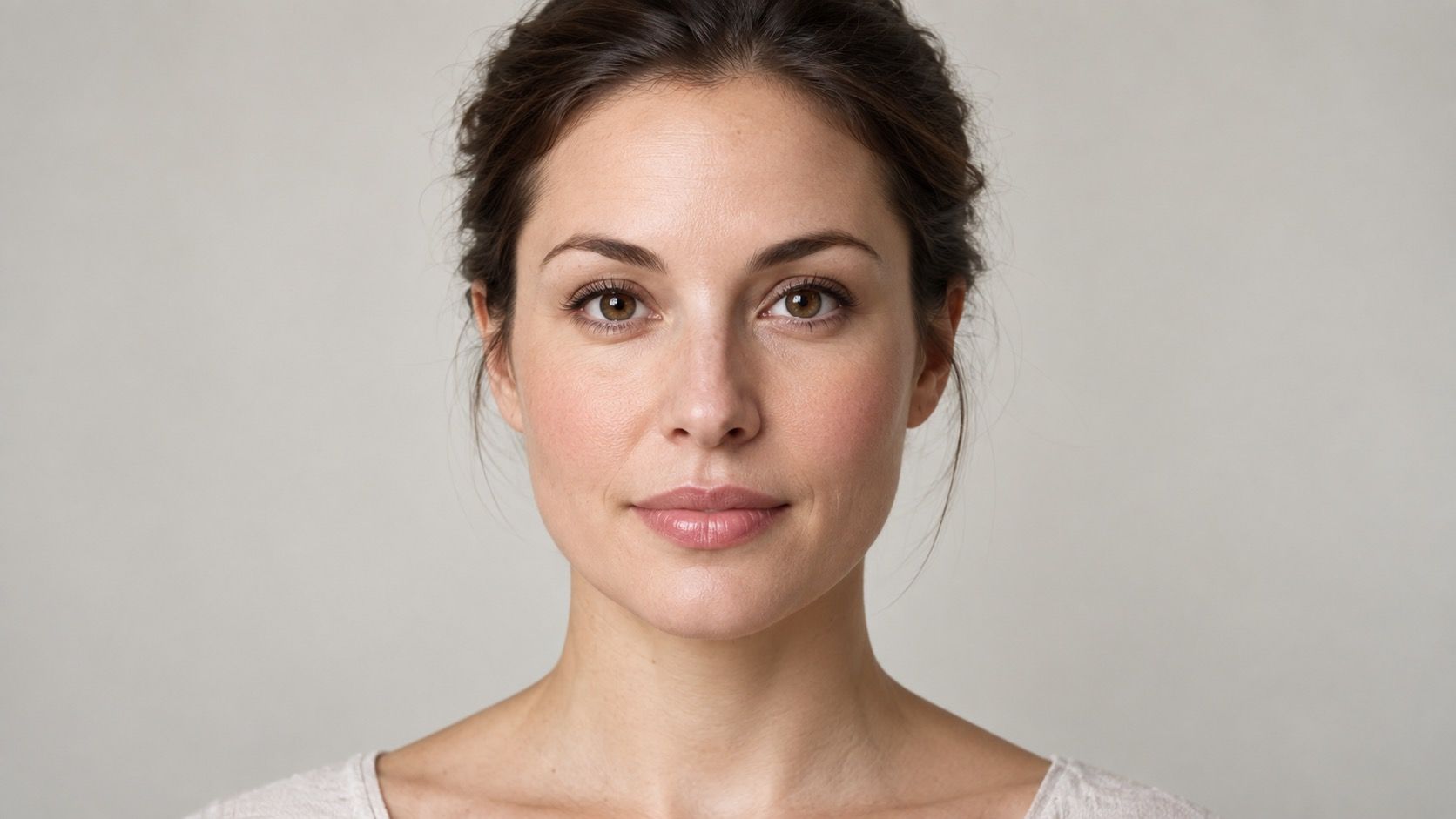
Oval face features usually include a face length that is greater than its width, cheekbones that are the broadest or close to the broadest point, and a jaw that narrows gently toward a rounded chin. The forehead may be a little wider than the jaw, but not dramatically so. The sides of the face curve instead of running straight down, and there are no sharp corners at the lower face.
Choose a haircut by the feature you want to show
It is easy to confuse an oval face with a long round face or a soft rectangle. Look at the jawline and the sides. A round face is often nearly as wide as it is long; a rectangle has more parallel sides and a stronger lower edge. An oval face keeps a gradual narrowing from cheekbones to chin. The distinction does not need to be exact to be useful.
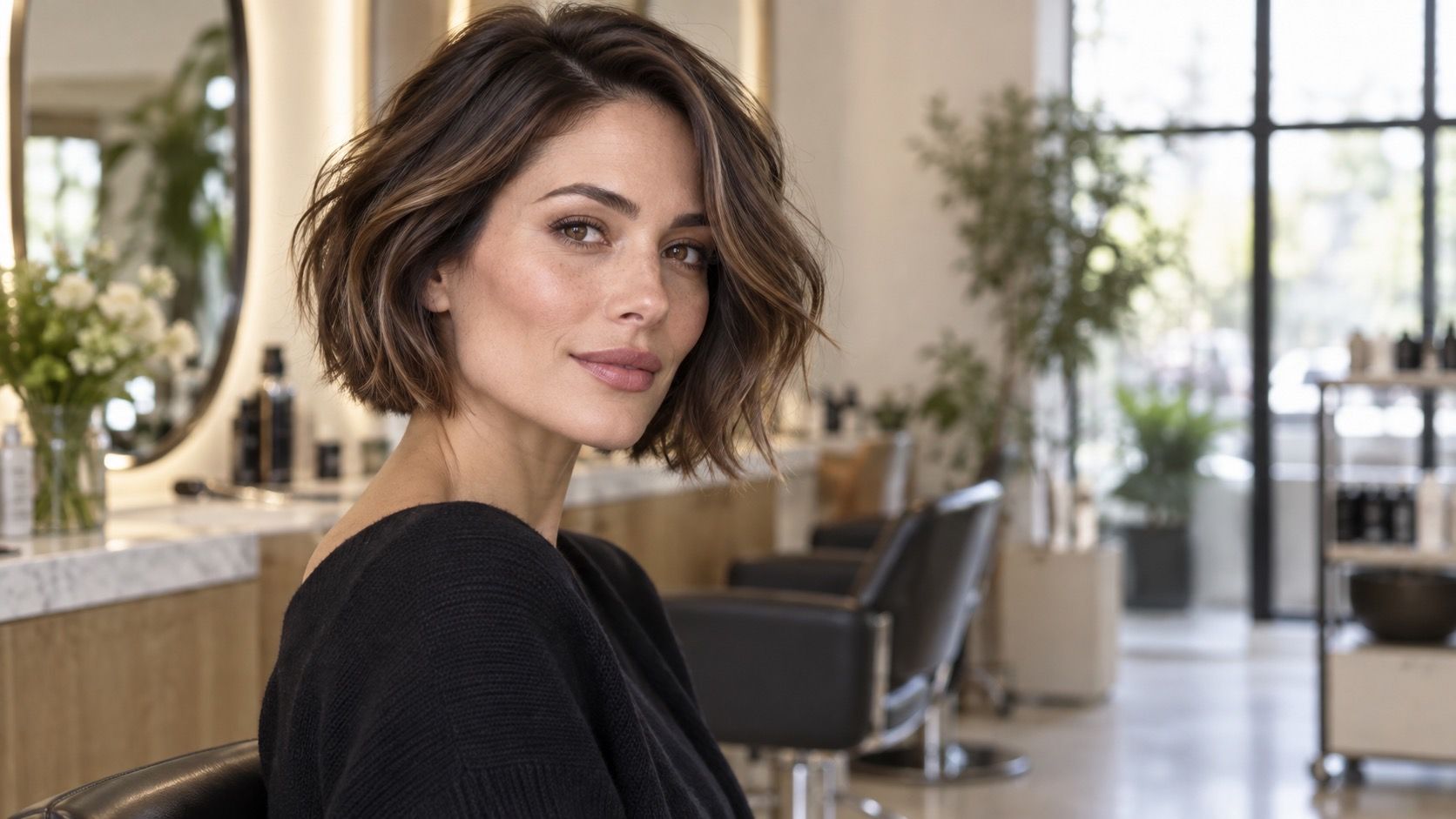
The best haircut for an oval face is rarely one fixed cut. A chin-length bob can highlight a graceful jaw, while a collarbone-length layered cut can add movement without making the face look hidden. Long layers work well when hair is dense or wavy because they break up a single heavy curtain. With fine hair, a blunt baseline may give more visible fullness than many wispy layers.
Before a major cut, notice where the widest part of the style will sit. Volume at the cheekbones can feel balanced on an oval face, but a very wide shape at that level may be more than you want if your cheeks are already prominent. Height at the crown lengthens the impression; fullness near the chin brings attention lower. Neither choice is a rule, just a reliable way to predict the effect.
Bangs and partings change the upper third
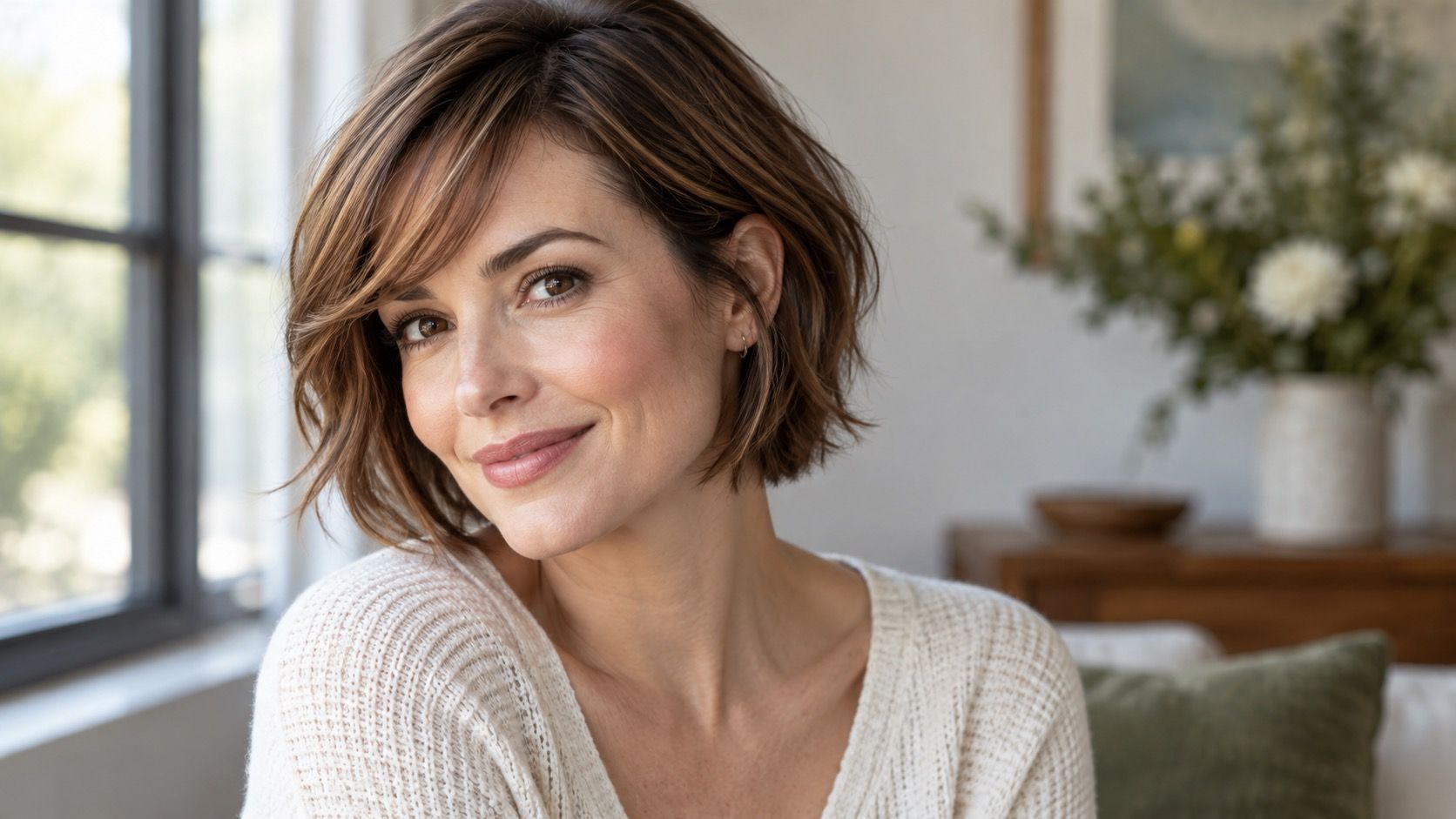
Because an oval face usually has room in the upper third, several fringe styles can work: curtain bangs, a light straight fringe, side-swept bangs, or a longer textured fringe. The details matter more than the name. Dense blunt bangs shorten the visible face length; airy pieces leave more forehead visible. If your hairline is low or your forehead is small, a softer, broken fringe may feel less crowded.
A center part emphasizes symmetry and gives hair an even frame around the cheeks. A side part creates a little asymmetry and can add lift at the roots, which is useful when hair lies flat. Try each part in daylight before deciding. A part that looks dramatic in a close mirror can look entirely natural from normal distance.
Pick glasses with proportion, not a formula
Oval faces can carry round, rectangular, cat-eye, and softly angular frames because the underlying proportions are already fairly even. The practical check is width: frames that stop near the temples generally look more integrated than frames that extend far beyond the sides of the face. Bridge fit also matters; a flattering shape that slides down the nose becomes distracting quickly.
| Frame direction | Visual effect | Check before choosing |
|---|---|---|
| Soft round | Keeps the overall line gentle | Make sure lenses are not oversized |
| Rectangular | Adds a little structure | Keep width close to the face width |
| Cat-eye | Lifts attention toward the temples | Choose an upsweep that feels natural |
| Bold geometric | Makes the frames the focal point | Balance weight with comfort and bridge fit |
Makeup placement can follow your own features
With an oval face, makeup often works best when it follows the existing structure rather than trying to create a new one. Blush placed high and slightly outward can keep the cheeks fresh; placing it more centrally gives a softer, rounded effect. Bronzer under the cheekbones can add depth, but a heavy stripe can flatten a face that already has subtle transitions.
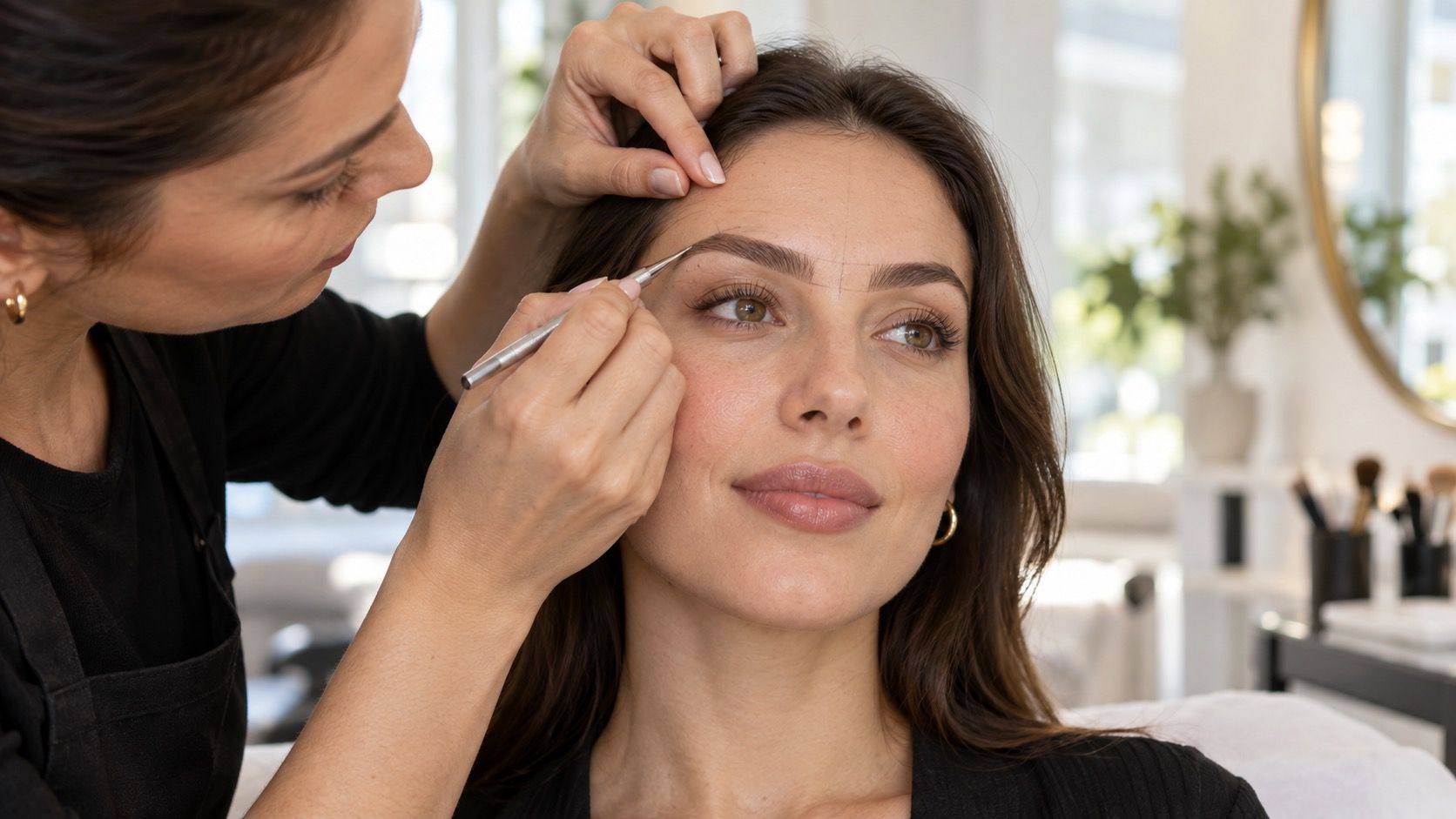
Brows deserve the same restraint. A natural arch that begins above the inner eye and peaks near the outer iris usually supports balanced proportions. Extending the tail too far downward can pull the eye area down; making the arch overly high can create an expression that does not match the rest of the face. Shape the brows around your bone structure, not a chart.
Styling details that are easy to overlook
Earrings, necklines, and hair texture all influence the outline seen around an oval face. Long narrow earrings add vertical movement; small hoops keep attention close to the cheeks; broad statement earrings create width near the jaw. A high collar may shorten the neck visually, while an open neckline leaves more space around the chin. These are small adjustments, but they explain why the same haircut can feel different with different outfits.
The advantage of balanced proportions is freedom to experiment, not pressure to make every option work. Keep a few photos of styles you genuinely liked and notice the repeat patterns: maybe face-framing layers, medium-width frames, or a defined side part. That personal evidence is more useful than a list of supposed rules for an oval face shape.
Build a small styling test instead of a rulebook
When choosing a new look, alter one variable at a time. Try the same haircut with a center part and then a side part; put on two frame shapes in the same daylight; compare a heavier fringe with face-framing layers. An oval face gives you enough balance to see these differences clearly. The result may be a preference for contrast, softness, height, or simplicity, and that preference is more valuable than trying to prove that every advertised option is flattering.
Keep comfort in the final decision
A good style should still work after a long day, a windy walk, or an ordinary morning without a full routine. A frame that pinches, bangs that need constant arranging, or layers that only behave after careful heat styling may not be worth the theoretical balance they promise. Photograph a new choice in daylight, then notice how it feels to wear. Comfort, maintenance, and personality belong in the decision alongside face proportions.