A round face shape has soft, open proportions rather than a flaw that needs correcting. Knowing where the width sits and how the jawline curves can help you choose hair, glasses, and makeup that either echo that softness or add a little definition, depending on the mood you want.
How to recognise a round face
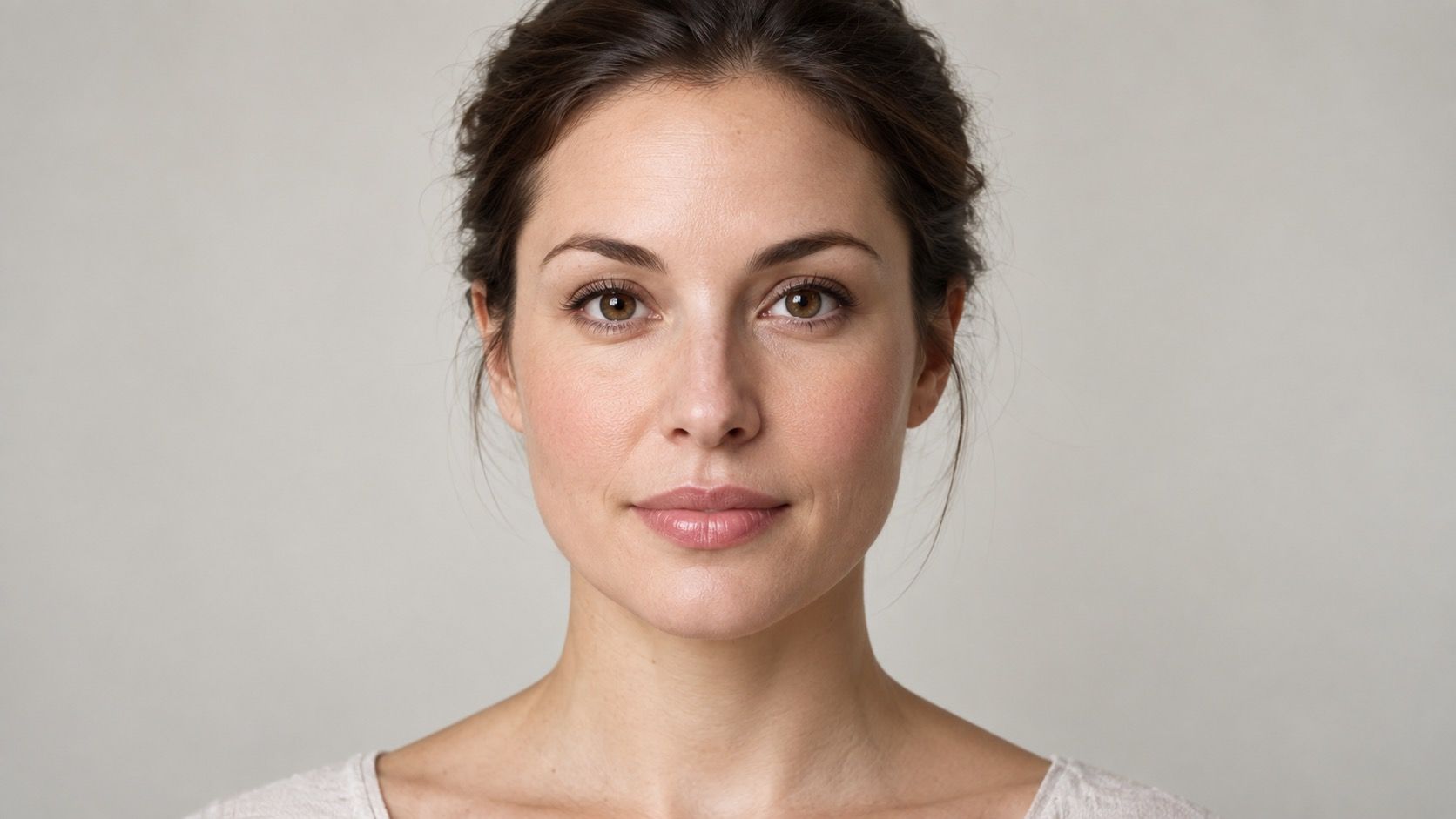
Round face features often include a face length and width that are relatively close, full or prominent cheeks, and a jawline that curves smoothly into a rounded chin. The forehead can be broad, but it is usually not dramatically wider than the cheeks. There are few sharp corners along the outer edge, so the outline reads as compact and soft even when the person is slim.
Use haircut proportions instead of chasing one perfect cut
Round is sometimes confused with square because both may have similar width and length. The jaw separates them: a square face has a more visible angle below the ears and a flatter lower edge, while a round face transitions gradually from cheek to chin. A short oval face can also look round, but an oval usually retains more vertical length and a gentler narrowing below the cheekbones.
The best haircut for a round face depends on hair texture, density, and how much maintenance you enjoy. Longer layers that begin below the cheeks can create vertical movement while still looking soft. A shoulder-length cut with face-framing pieces can define the sides without turning the hair into two hard lines. With curly hair, shaping the volume slightly higher at the crown often feels more balanced than building all the width beside the cheeks.
Short cuts can work just as well. A textured pixie with height near the crown, a cropped bob that sits below the chin, or an asymmetrical shape can change the visual direction of the style. The useful question is where the bulk lands. A very blunt, wide cut ending at the widest cheek point may emphasize width; that may be exactly the bold look you want, but it should be a choice rather than a surprise.
Try partings and bangs with a clear purpose
A side part often adds diagonal movement and a little root lift, which can make hair feel less centered around the cheeks. A center part can look sleek and modern on a round face too, especially when the lengths fall below the chin. Test both with your usual makeup and glasses; the parting that flatters bare-faced skin may not be the one you prefer for an evening look.
For bangs, longer curtain pieces or side-swept fringe can frame the forehead while preserving some vertical openness. A short, dense straight fringe shortens the face visually and concentrates attention high up, which can be playful but more dramatic. Wispy bangs are not automatically better; they simply leave more of the forehead visible. Hair growth patterns and cowlicks matter more than a universal rule.
Frames can add definition or repeat softness
Angular frames are often recommended for a round face because corners create contrast with soft cheeks and a curved jawline. Rectangular, square, or gently upswept cat-eye frames can make the eye area feel more structured. The fit is more important than the label: a frame should sit securely at the bridge, follow your brow line comfortably, and stay close to the width of your face.
| Style choice | Possible effect | Practical check |
|---|---|---|
| Height at the crown | Adds vertical direction | Keep roots comfortable, not stiff |
| Face-framing layers below cheeks | Creates a longer line | Adjust for curl shrinkage |
| Side part | Adds asymmetry and lift | Check where your hair naturally separates |
| Angular frames | Adds contrast and definition | Match frame width to the temples |
| Round frames | Repeats soft features | Choose them because you like the effect |
Round frames are not off-limits. They echo the existing shape and can look intentional, especially with a slightly thicker rim or a defined brow line. Oversized frames may overwhelm delicate features regardless of face shape, while narrow frames can look lost. Try several widths rather than deciding from a filtered product image.
Place makeup around your preferred emphasis
Makeup for a round face does not require a permanent contour map. Blush placed high toward the temples can draw attention outward and upward; blush centered on the apples of the cheeks gives a more youthful, rounded effect. Bronzer under the cheekbones can create depth when blended lightly, while a narrow, dark stripe tends to look obvious in daylight and rarely improves the overall result.
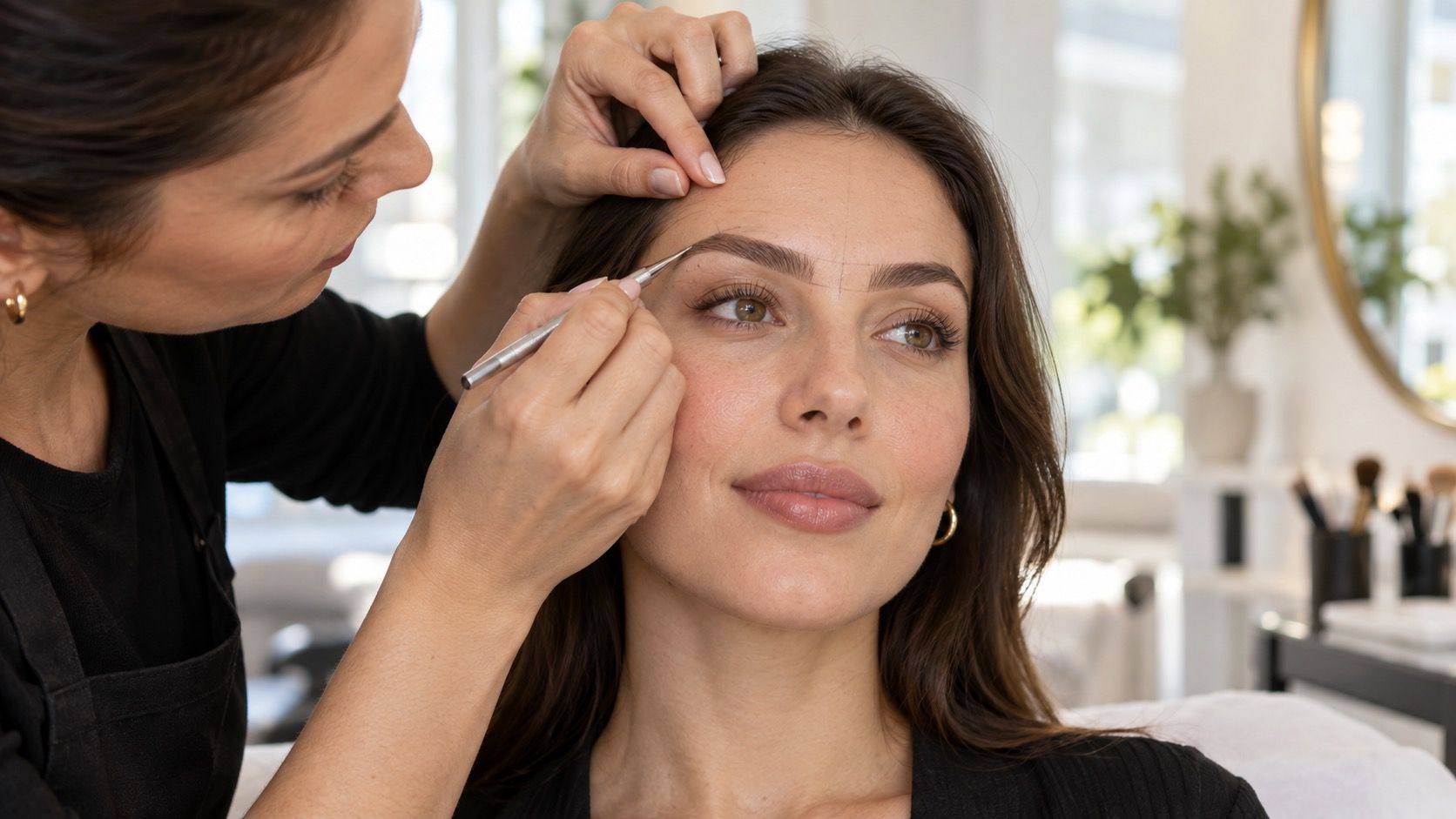
Brows can introduce a little structure if that appeals to you. A soft arch and a clean tail direct attention across the upper face without making the expression severe. Highlighting the center of the forehead, nose, and chin adds vertical light, but use a subtle hand. Texture and skin tone should remain visible; a face does not need to look carved to look defined.
Style around the feature you enjoy most
Round faces are often praised for cheeks, but that can make people feel obliged to hide them. There is no reason to do that. If you like the softness, choose curls, rounded bobs, and gentle frames that repeat it. If you prefer more length or edge, use crown height, a lower parting, longer layers, or angular accessories. Both directions start from the same information about proportions.
Keep a few unfiltered photos of styles that felt right, taken from a normal distance. Notice whether you liked the height at the crown, the movement around the jaw, or the contrast of your glasses. That record will teach you more than generic advice. A round face shape is a useful description of width-to-length ratio and a soft jawline, not a set of restrictions on your personal style.
Use appointments and try-ons to gather evidence
Bring two or three reference images to a hair appointment, but explain what you notice in them: crown height, a lower layer, an off-center part, or the way the ends sit below the jaw. That gives a stylist something concrete to adapt to your density and growth pattern. The same applies to glasses: try several frame widths while facing a normal mirror, then photograph the finalists from a few feet away. Small real-world tests beat a strict list of do's and don'ts.