A square face is defined less by one dramatic feature than by a repeated sense of width: forehead, cheek area, and jaw can look close in measurement. That structure photographs beautifully, but it can make a haircut or frame feel severe when every line is equally straight. The useful question is not how to hide the angles. It is whether you want to soften them, echo them, or create a little contrast around them.
How to recognise a square face shape without guessing
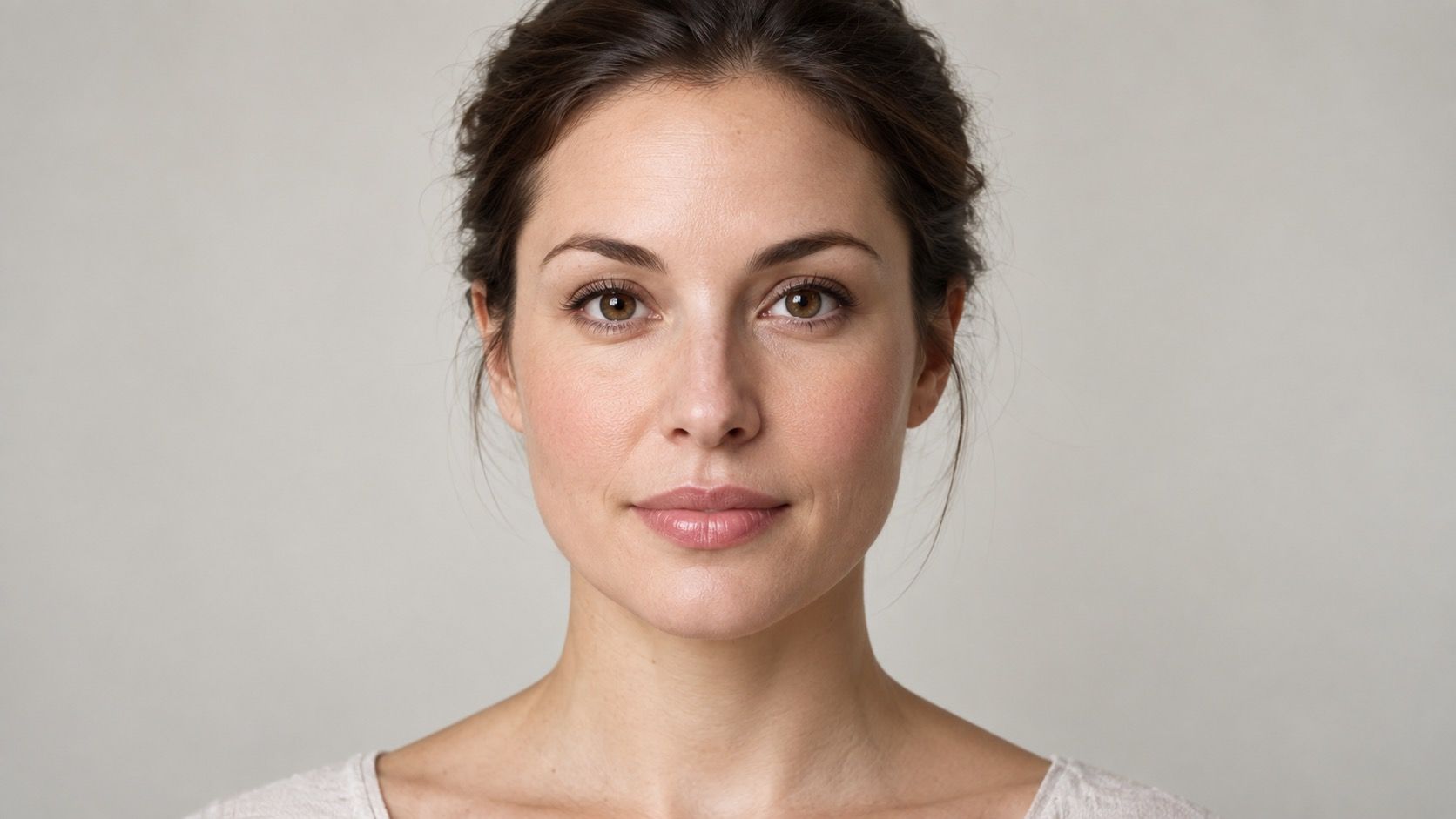
Start with a clean mirror, hair pulled away from the temples, and a relaxed expression. A square face usually has a broad forehead and a defined jawline of similar visual width. The sides of the face may appear fairly vertical from temple to jaw, while the chin is broad or gently flat rather than narrow and pointed. High cheekbones can be present, but they do not usually become the widest point in the way they often do on a diamond face.
Haircuts that soften angles or make them look intentional
Measurements are a helpful check, not a verdict. Compare the width across the forehead, the widest part of the cheekbones, and the jaw. On a square face those three areas tend to sit fairly close together, while face length is only moderately longer than width. Look at a straight-on photo taken at eye level as well: a low camera angle can exaggerate a jaw, and a wide phone lens can make any face look broader.
The common mix-up is with a rectangle face. Both shapes have a strong jaw, but a rectangle is noticeably longer from hairline to chin. An oval face may also have a firm jaw, yet it narrows more clearly at the forehead or chin. If your outline changes from square to rounded depending on your hairstyle, that is normal; face shape is a proportion guide, not a permanent label.
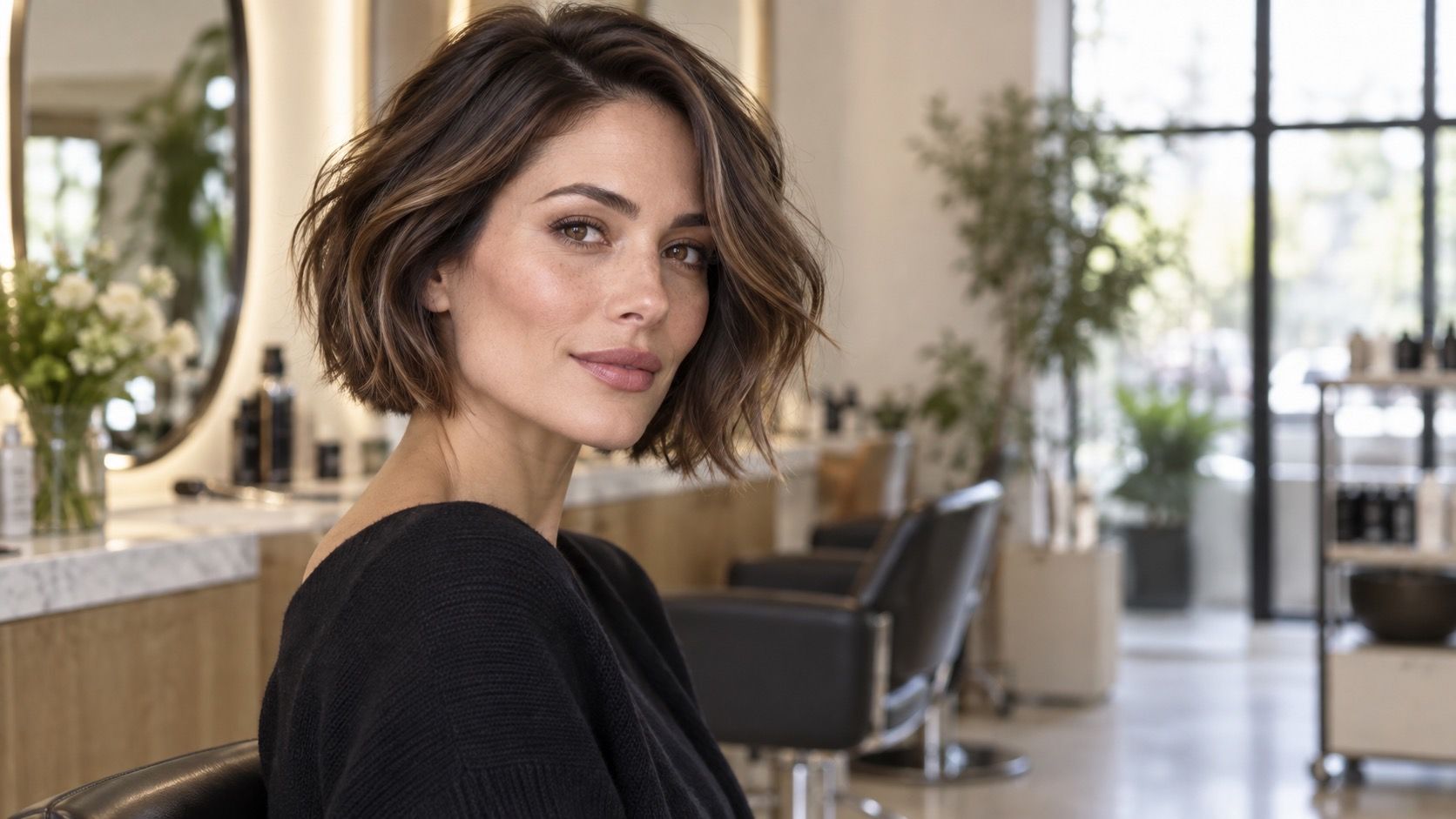
For a softer effect, keep movement around the jaw rather than cutting a blunt horizontal line exactly at it. Medium or long layers beginning below the cheekbones can break up the parallel lines at the sides of a square face. A collarbone-length cut with textured ends is often easier to wear than a heavily layered style: it gives face-framing without removing density from fine hair. On curls, a rounded silhouette and a little lift at the crown can create the same balance.
A long bob can work especially well when the front is slightly longer than the back and the finish is not pressed pin-straight. The diagonal front line guides the eye down rather than outward. If you prefer a short cut, a textured pixie with softness at the temples and a side-directed fringe is more forgiving than a sharply boxed crop. The aim is not to cover the jaw; a visible jaw can look striking when the rest of the cut has some air and irregularity.
There is also a case for embracing the geometry. A sleek blunt bob, a close crop, or a center-parted style can make square face features look modern and deliberate. The detail that decides it is proportion. A blunt bob cut right at the widest jaw point can widen the face visually, while a bob a little above or below that point usually feels more balanced. Try the shape in a loose styling session before committing to the cut.
| Styling goal | Useful haircut detail | Watch for |
|---|---|---|
| Soften the jaw | Layers below the cheekbones, textured ends, loose bends | A thick blunt line ending at jaw level |
| Add length | Volume at the crown and longer front pieces | Very wide side volume with no height |
| Keep a graphic look | Clean bob or crop with one asymmetrical detail | Matching every edge with another hard edge |
Bangs and partings change the balance quickly
A side-swept fringe is a reliable starting point because it creates a diagonal over a broad forehead. It does not need to be a heavy curtain of hair; even a longer piece that falls from a deep side part can soften the transition between temple and cheekbone. Wispy curtain bangs also work when they open slightly in the middle and blend into layers. Their softness matters more than the exact length.
A full straight fringe can be flattering too, particularly if the goal is a bold, editorial look. It works best when its edge is lightly textured and the rest of the hair has movement. A dense, ruler-straight fringe paired with very flat, blunt hair can make the upper half of the face look wider, so give the style a test with your usual glasses and makeup rather than judging it in a salon chair alone.
Center parts are not off limits. They suit square faces when the hair has length, a bend, or face-framing pieces that prevent two flat vertical curtains from sitting beside the jaw. A slightly off-center part is a useful compromise for people who like symmetry but want less emphasis on the width of the forehead.
Choose glasses and earrings by line, not by a rulebook
Glasses sit directly across the most visible part of the face, so their shape can change the impression more than a haircut does. Curved frames, soft ovals, and rounded cat-eye shapes bring contrast to a defined jawline. Frames that are a little wider than the face can also make the jaw look less dominant, provided they do not slide down the nose. Try them in daylight: a frame that looks delicate under shop lights can disappear in a phone photo.
Angular frames are not forbidden. A squared acetate frame can look excellent on a square face when it has rounded corners, a lifted brow line, or a lighter rim. The less successful version is often a small, narrow rectangle with sharp corners; it repeats the face outline and can make features look compressed. Sunglasses deserve the same test, especially oversized styles whose lower edge may sit directly over the cheekbones.
For earrings, curved hoops, teardrops, and slim drops introduce movement near the jaw. Wide geometric studs can be a strong fashion choice, but they add width, so they are better paired with hair that has some height or side sweep. The choice is aesthetic rather than corrective: accessories should support the overall silhouette you enjoy seeing in the mirror.
Makeup and beard choices can redirect emphasis
With makeup, the most natural-looking approach is usually to place warmth and luminosity slightly above the widest part of the jaw. Blush swept from the apple toward the temple creates an upward direction. A very horizontal stripe of blush across the cheek can broaden the face, while contour drawn heavily along both sides of the jaw can make it look more squared rather than less. Use a light hand and assess it from normal talking distance.
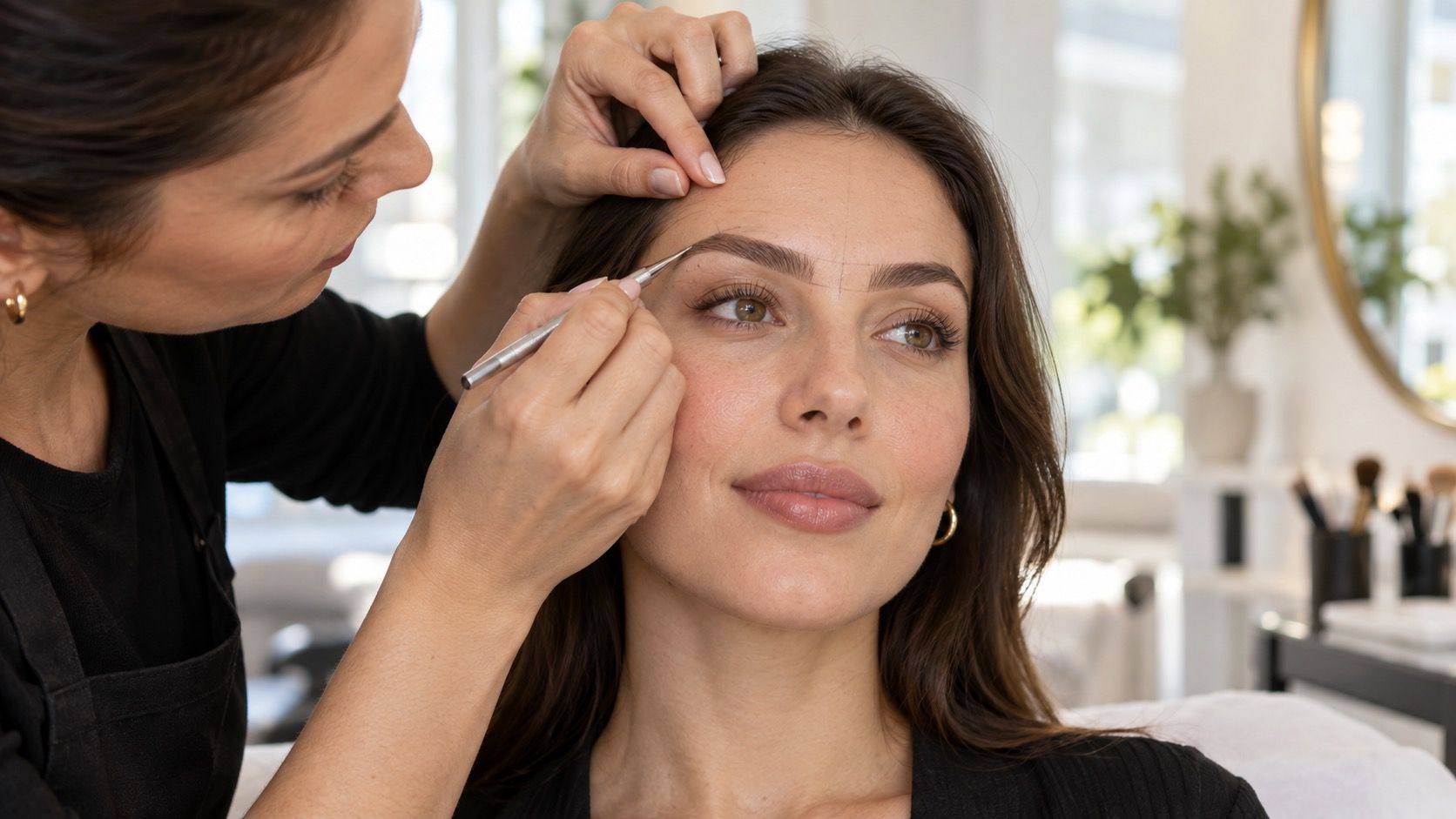
Brows have a similar effect. A softly curved or gently angled brow can balance a strong jawline; an aggressively squared brow may make the whole face read more architectural. That does not mean rounding every feature. Keeping the brow full and natural often gives enough softness without changing its basic shape.
For men, facial hair can either underline or diffuse the jaw. Short stubble preserves the natural outline. A beard with slightly more length at the chin and softer, less boxy corners can add vertical direction, while very crisp right angles at the jaw tend to make it look wider. Growth pattern, density, and daily maintenance matter more than a diagrammed beard template.
Use face shape as a starting point, then trust the practical test
The best haircut for a square face is the one that still works on an ordinary morning: with your natural texture, your glasses, and the amount of styling time you actually have. Save a few reference images with similar hair density and ask your stylist where the weight will sit around your jaw. A flattering shape can be ruined by a cut that needs forty minutes of heat styling to resemble the photo.
Take comparison photos before and after a change, facing forward and turned slightly to each side. Notice which details make you feel most like yourself: visible cheekbones, a softer fringe, a sharper bob, or a frame with a bit of lift. Square face shape guidance is most useful when it gives you language for those choices, not when it turns them into restrictions.