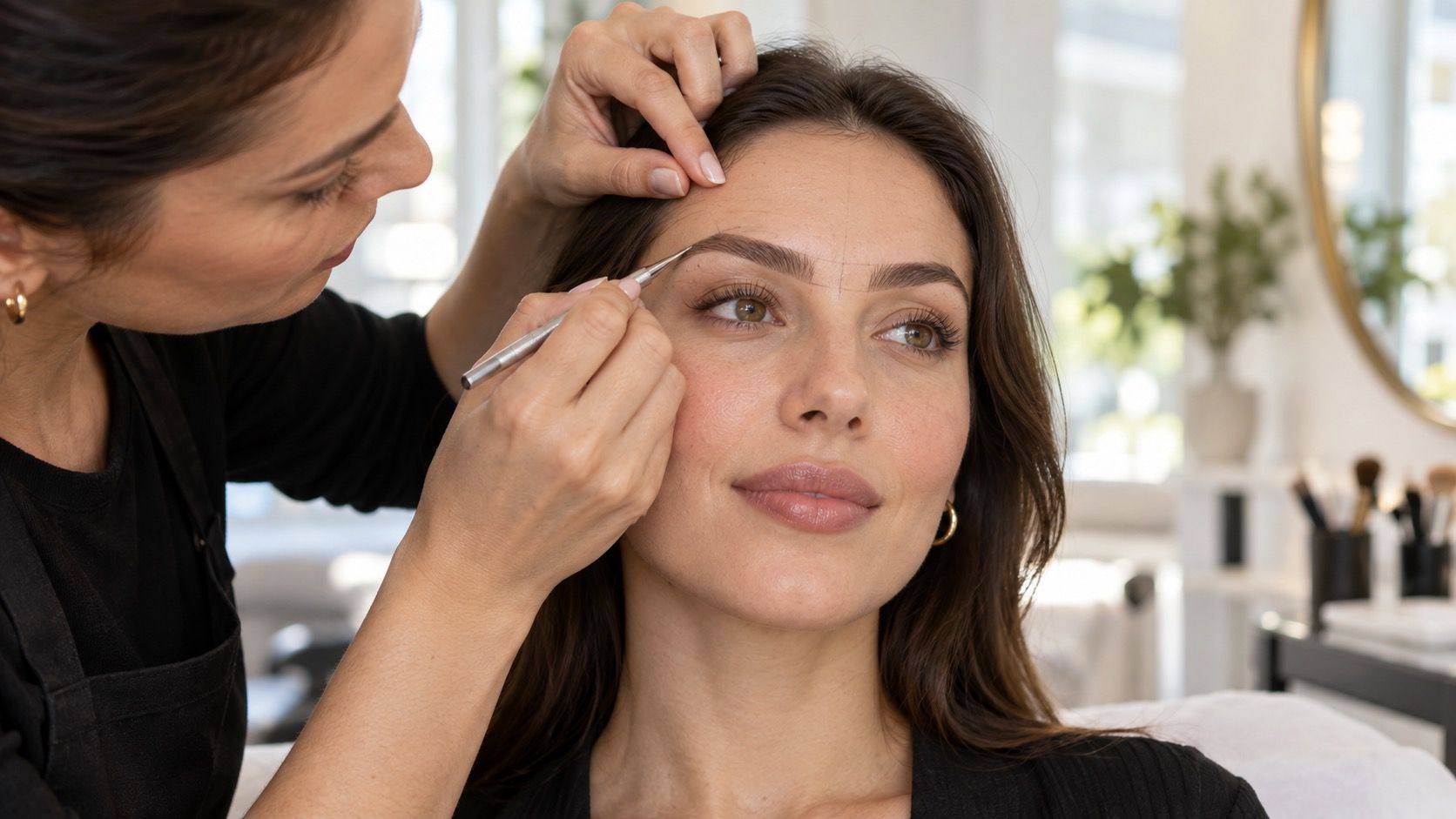
A triangle face shape is often called a pear face shape: the forehead is relatively narrow and the face becomes broader through the jaw. That description is useful, but it is not a verdict. The aim of styling is usually to make the upper and lower thirds feel more evenly related, while leaving room for your hair density, glasses prescription, and the features you actually like.
How to recognise a triangle face without forcing the label
Pull hair away from the temples, look straight into a mirror, and compare the width near the hairline with the width at the jaw corners. On a triangle face, the jawline is commonly the widest horizontal point. The chin may be rounded, softly squared, or a little pointed; it is the gradual widening below the cheekbones that matters more than the chin alone.
Haircuts that create balance near the temples
A front-facing phone photo can help, provided the camera is at eye level and not close enough to widen the centre of the face. Check two or three photos rather than trusting a single selfie. A low camera angle, a wide-angle lens, and hair tucked behind both ears can all exaggerate a wide jawline. Many people sit between triangle, oval, and square, so use the category as a styling clue rather than a diagnosis.
The most useful haircut for a triangle face usually adds some visual presence above the cheekbones. That can mean soft crown layers, a bob that has movement around the temples, or a medium cut with a little lift at the roots. The goal is not to make the top of the head huge. A small amount of width around the upper face often changes the overall proportion more convincingly than dramatic volume at the crown.
Very blunt, jaw-length cuts can put a hard horizontal line exactly where the face is already broadest. They are not forbidden, but they tend to work better with texture, an off-centre part, or pieces that turn inward above the jaw. If you love a sharp bob, ask the stylist where its visual weight will land after your natural texture dries. The salon finish and your Tuesday-morning finish are not always the same haircut.
Long hair can be especially flexible when layers begin around the cheekbones or collarbone rather than only at the jaw. Loose waves, face-framing pieces, and an airy fringe distribute attention upward. Heavy lengths with no movement may make the lower face look more substantial by comparison, particularly when hair is worn flat behind the ears.
| Hair choice | What it tends to do | A practical check |
|---|---|---|
| Textured fringe | Adds softness across a narrow forehead | See whether it separates naturally at your cowlick |
| Temple-level layers | Creates width above the jaw | Check the shape after air-drying |
| Blunt jaw bob | Can underline jaw width | Add movement or shift the part if it feels heavy |
| Long soft layers | Keeps attention moving through the face | Ask how much daily styling is needed |
Bangs and partings when the forehead feels narrow
A textured fringe can be a very good match for a pear face shape because it adds a gentle horizontal element near the forehead. It need not be a dense curtain. Wispy pieces, a side-swept fringe, or a relaxed centre-part curtain fringe all give the upper face more presence without hiding it. Dense straight bangs can look striking too, but they ask for regular trims and can become a flat block if the hair is fine.
Partings are a low-risk experiment. A deep side part often gives one temple a little lift and breaks a strict vertical centre line. A middle part can still work beautifully when the hair has movement at the cheeks or temples. Take the same photo with three partings in daylight; it reveals more than a quick mirror glance under an overhead bathroom light.
Choosing glasses and sunglasses that do more than follow a chart
For a triangle face, frames with visual interest across the brow line are often easier to wear than frames that are heaviest at the bottom. A slightly wider top edge, an upswept corner, or a frame with a defined brow can echo the width you are adding through hair. The frame should still sit within the face rather than extending so far that it looks borrowed from a much larger head.
Fit comes first. The bridge must stay put when you smile, the pupils should sit close to the lens centres, and the lower rim should not press into the cheeks. A flattering cat-eye that slides down your nose is simply an irritating pair of glasses. Try sunglasses outside if possible: dark lenses remove some of the facial cues you use indoors, and a frame that feels balanced in a shop can look much stronger in full sun.
Makeup, facial hair, and the places worth softening
Makeup for a triangle face works best as restrained placement. A little blush placed high and outward toward the temples can shift visual attention upward, while a subtle highlight on the high points of the cheeks catches light without drawing a new stripe across the face. Strong dark contour along the entire jaw often does the opposite of what people expect: it can make the lower third look more outlined and more deliberate.
If you wear facial hair, beard shape is another adjustable line. Keeping the sides very full at the jaw can add width, while a neater cheek line and controlled length through the chin may create a more vertical read. There is no need to carve the face into a different geometry. Stand a few steps back from the mirror, then decide whether the overall silhouette looks calm; close-up grooming habits can make small details feel larger than they are.
Build a personal style test instead of chasing a perfect correction
Choose one variable at a time: change the part, then try frames, then alter the haircut. When hair, makeup, and glasses are all changed on the same day, it is hard to tell what actually made you feel more like yourself. Save a few neutral photos in the same window light and look at them a day later. Immediate reactions tend to reward novelty, while a calmer comparison shows whether a style really fits your features and routine.
The best haircut for triangle face proportions is ultimately the one you can maintain without fighting it every morning. A shape with soft temple volume, a considered fringe, or a more animated frame may be helpful starting points. Keep the useful principles, discard the rules that make you self-conscious, and let your natural texture have a vote.